

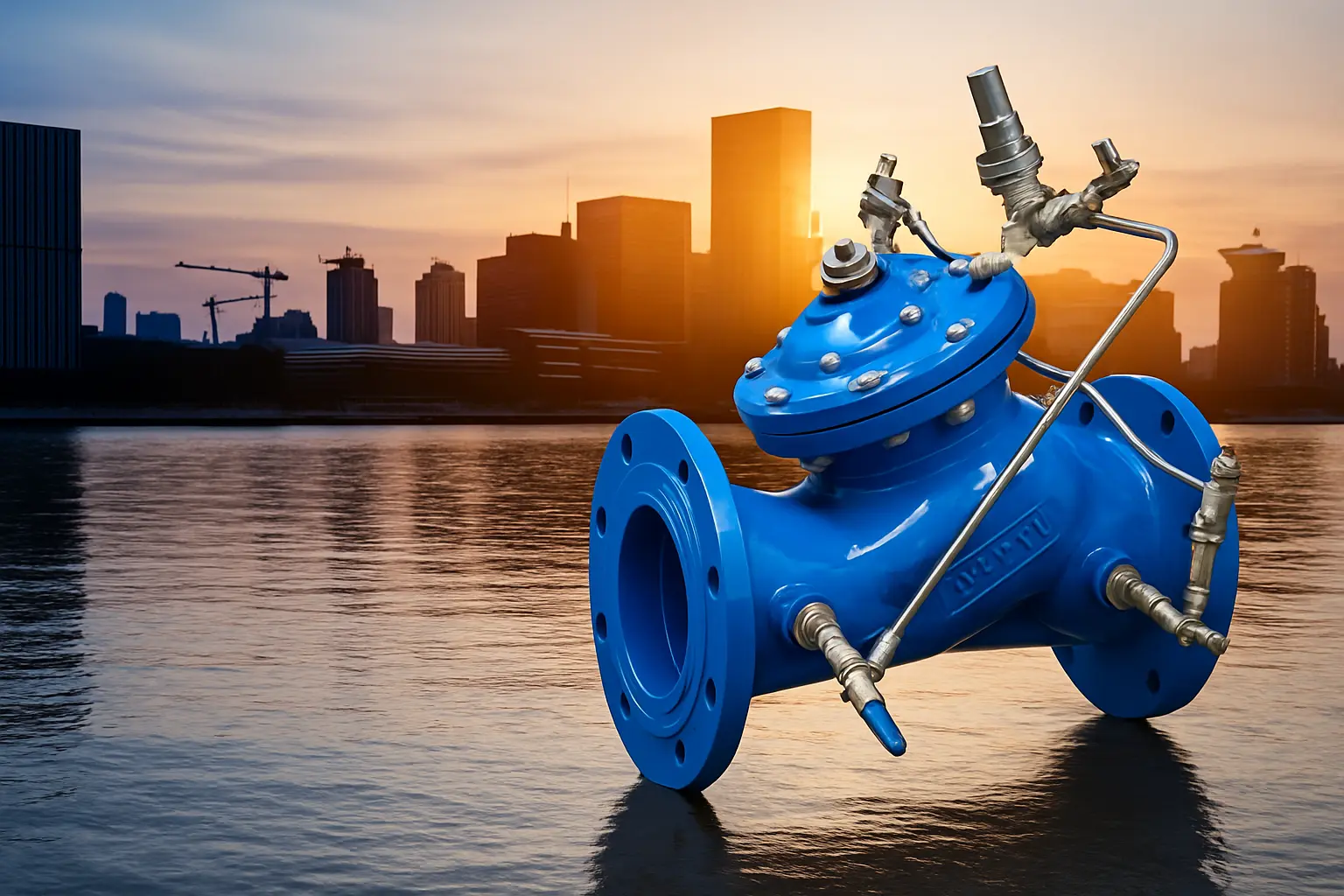
In high-rise architecture, managing water pressure is one of the most critical challenges for MEP (Mechanical, Electrical, and Plumbing) engineers. As buildings climb higher, the weight of the water column creates massive hydrostatic pressure at lower levels, while upper floors often struggle with insufficient flow. The Pressure Sustaining Valve (PSV) is the silent guardian of these systems, ensuring that the entire building remains pressurized and protected.
What is a Pressure Sustaining Valve?
A Pressure Sustaining Valve is a hydraulically operated control valve designed to maintain a minimum, pre-set pressure upstream (before the valve), regardless of flow fluctuations or downstream demand. Unlike a Pressure Reducing Valve (PRV), which protects the pipes after the valve, the PSV ensures that the pressure before it does not drop below a critical level.
Critical Roles in High-Rise Installations
1. Preventing System “Dry-Out” In a high-rise building, if a lower floor demands a massive amount of water suddenly, the pressure in the main riser can drop significantly. This drop can leave the upper floors with zero water pressure. A PSV installed on a lower branch or main line prevents this by closing slightly if upstream pressure drops, effectively “sustaining” the water supply for the higher zones.
2. Pump Protection and Efficiency High-rise buildings rely on booster pump sets. If the system demands more water than the pumps can safely provide, the pumps may run off their performance curve, leading to cavitation or motor burnout. A PSV ensures the pumps always work against a minimum backpressure, maintaining their efficiency and longevity.
3. Zone Prioritization Large buildings are divided into pressure zones. PSVs allow engineers to prioritize critical zones (such as fire protection systems or luxury penthouse tiers) by ensuring that these areas always have the minimum required pressure before water is allowed to flow into secondary or lower-priority branches.
Technical Features of Modern PSVs
Modern solutions, such as the BERMAD 700 or 1000 Series, offer specific advantages for building services:
- Accurate Regulation: High-precision pilots allow the valve to react to even minor pressure changes, ensuring a steady state throughout the building.
- Quiet Operation: Specifically designed to minimize “water hammer” and vibration, which is essential for residential high-rise comfort.
- Durability: Whether using metal-bodied valves for main risers or advanced composite materials for specific zones, these valves are built for high-cycle environments.
Maintenance Tip
Because high-rise buildings operate 24/7, choosing a valve with a modular design is vital. Systems like the BERMAD 1023 (Pressure Reducing & Sustaining) allow for quick inspection and part replacement without removing the entire valve body from the pipeline, significantly reducing downtime for tenants.
1 Comments
by A WordPress Commenter
Hi, this is a comment.
To get started with moderating, editing, and deleting comments, please visit the Comments screen in the dashboard.
Commenter avatars come from Gravatar.